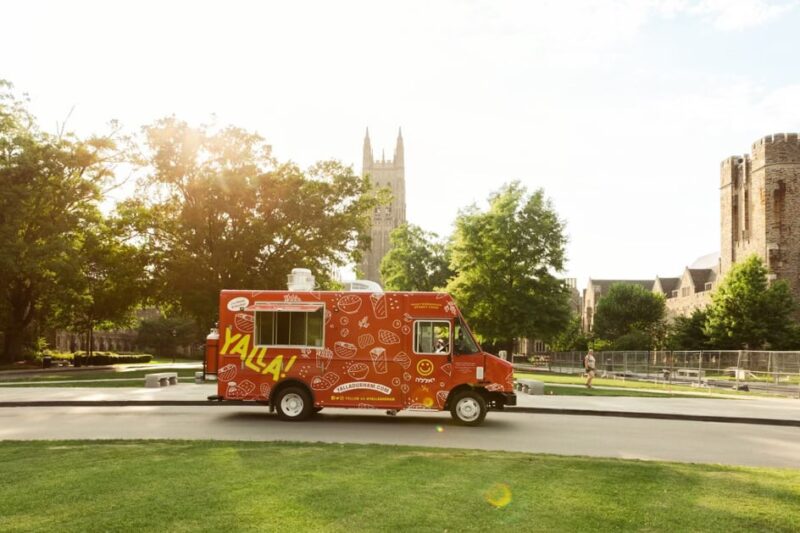
We run Yalla at Duke. We wrote down everything we know about it. The recipes, the vendors, the equipment, what to do when something breaks. $3,600 once. Yours forever.
A lot of people kept asking how we did it.
Every few months another shliach would call or email asking how Yalla works. What equipment do you have. Where do you get your meat. How do you handle the lunch rush. What's the food cost on a falafel pita.
We'd answer one call, then a week later answer the same question for someone else. After a while it made more sense to just write it all down. The recipes, the vendors, the equipment, the launch checklist, the things that broke, the things we'd do differently if we started over.
That's what this is. If you're a Chabad shliach or shlucha thinking about opening a campus food truck, the playbook is for you.
Everything in the manuals is what we actually run today.
One truck on BC Plaza at Duke, four days a week through the school year. Lunch rush, catering, holidays, finals week.
Rabbi Nossen Fellig, Chabad at Duke, supervises kashrut on site. We've operated under Chabad Lubavitch standards since the day we opened. The Food Safety manual walks through what we check, how we separate, what we source.
Glatt kosher meat is the most expensive thing in this business. We hold a 21% food cost anyway. The Finance manual shows how — yields, batch sizes, vendor list, what to negotiate and where.
Catering at campus events
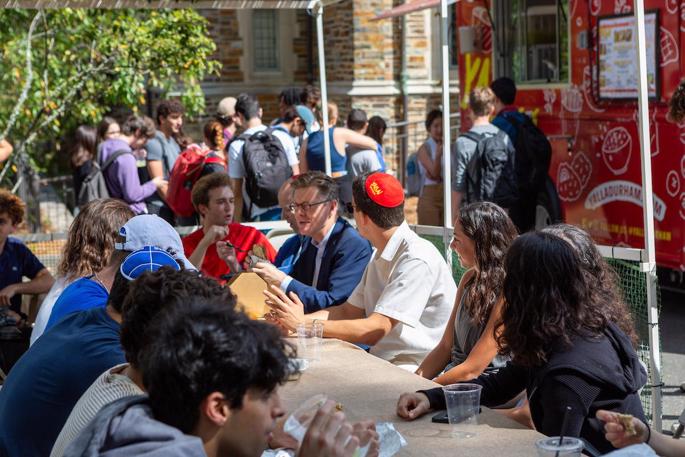
Lunch rush on BC Plaza
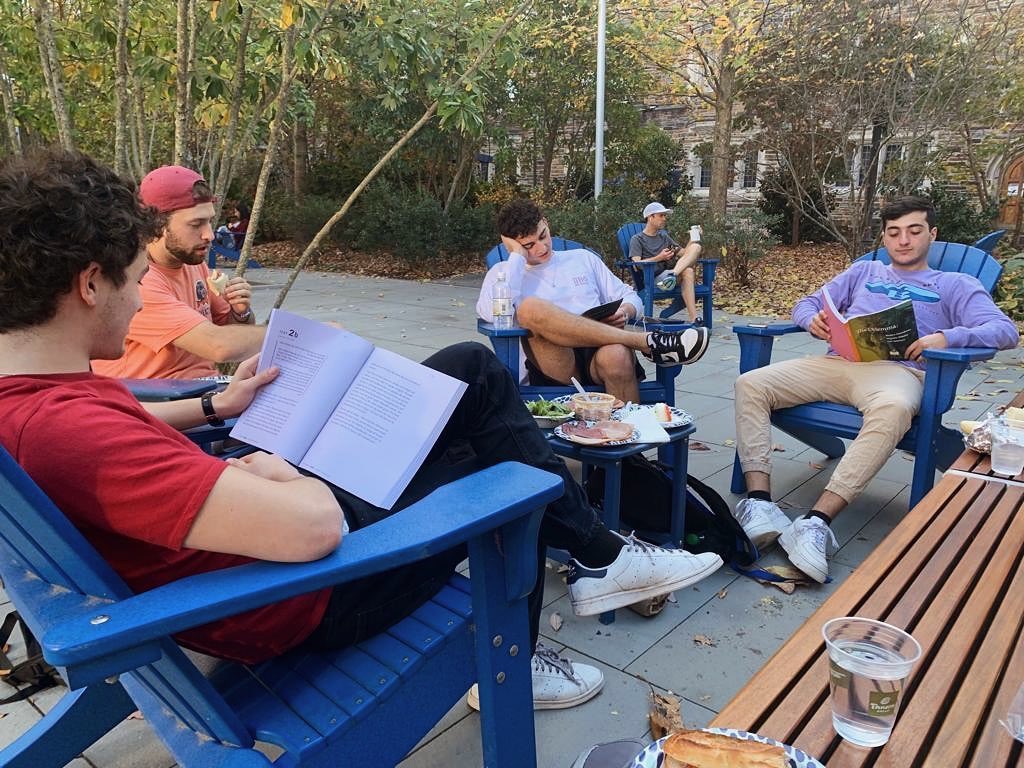
On campus, week in week out
I've run Yalla from day one — built the menu, set up the kitchen, hired the team, fixed what broke. Most of these manuals are mine. If you buy the playbook and have a question I haven't already answered in it, you can email me directly.
Nine manuals, a full video library, recipes, and our vendor list. Everything we use to run the truck.
How a day on the truck actually runs, from open to close
Recipes, prep steps, and the order we make things in
Hiring, scheduling, pay, and how we train new line cooks
Bookkeeping, food cost, and what we track week to week
How we stay kosher day to day, plus health department basics
Quoting, prepping, and serving large groups off-truck
How we get the word out on campus and keep students coming back
Launch checklist and the order we'd do it in if we started over
The forms and logs we actually print out and use every day
A step-by-step video for every menu item, filmed in our kitchen. Here are a few 15-second previews.
Mixing, shaping, frying, holding.
From chickpeas to plate. The yield we use, the texture we hold to.
Stacking, slicing, plating during a rush.
The full library covers Falafel, Hummus, Hummus Base, Shawarma, Tahini, Schug, Schnitzel, Pickles, and Lemonana, plus the prep workflow, line setup, and clean-down. Once you have a login it's yours to keep.
Pay once. Yours forever.
Secure Stripe checkout. After payment, you'll get a sign-in link by email and the full library opens immediately.
Questions before you buy? Email info@yalladurham.com.
You'll still need a truck, equipment, permits, local kashrut supervision, inventory, payroll, and an agreement with your university. The blueprint helps you plan all of that. It doesn't pay for it.
A login to a website with nine PDF manuals, a video library, recipes with yields and costs, and the vendor contact list we use. Once you're logged in, you can download all of it.
A focused week. The manuals are dense but practical. Most people read the Operations and Kitchen manuals first, then come back to the others as they hit those parts of the build.
It helps a lot. Running a lunch rush, managing food cost, hiring kitchen staff. None of that is easy. If you've never worked a line, plan to hire someone who has. The blueprint won't replace that experience.
You'll need supervision from a local rav. The food safety manual covers how we keep things kosher day to day — what we check, how we separate, what we source, how we clean. The procedures travel. The supervision doesn't.
It works best where there's already a Jewish student presence and an active Chabad house running programming. Yalla at Duke serves around 400 Jewish students with four days a week on BC Plaza. The bigger the Jewish presence and the more catering you can layer in (holidays, Shabbat, parent weekend), the better the economics. If you want to talk through whether your specific campus is a fit, email us first — we'd rather you ask than guess.
No. Everything we'd tell you on a call is already in the manuals. You can email us with a specific question after you've read them and we'll answer when we can, but it's not part of the price.
If we change something important, we'll email you a new link. No extra charge.
Email us. We'll send you a sample chapter so you can see how the manuals are written before you pay. Once your login is issued and you can see the full library, the sale is final — you can't un-download a manual. We'd rather you ask first than buy unhappy.